How to Wash Cloth Diapers: A Simple, Step-by-Step Guide | Bayrli®
How to Wash Cloth Diapers: A Simple, Step-by-Step Guide
Washing cloth diapers is simpler than most people expect. It is also the single most important thing you will do to protect your investment, prevent odours, and keep your baby's skin healthy. Yet it is the aspect of cloth diapering that generates the most anxiety among new parents, and the most conflicting advice across the internet.
This guide exists to cut through that noise. We will walk you through a clear, evidence-based wash routine that works, explain the reasoning behind each step, and flag the mistakes that cause problems down the line. Whether you use Bayrli diapers or another brand, the fundamentals are the same.
Before You Begin: What You Need
You do not need specialist equipment. You need a standard washing machine, a mainstream detergent, and a place to dry. That is it.
A few specifics worth noting. Use a powder detergent rather than liquid or pods where possible; powder detergents tend to clean more effectively at lower doses and leave less residue. Avoid detergents with added fabric softener, as these coat fibres and reduce absorbency over time. Popular, widely available options such as Tide Free & Gentle (in the US) or Persil Non-Bio (in Ireland and the UK) work well. You do not need a cloth-diaper-specific detergent unless you have particularly hard water or a specific skin sensitivity to navigate.
You will also want a dry pail or wet bag to store soiled diapers between washes. There is no need to soak or rinse diapers before wash day; simply place them in the pail and wash within two to three days.
The Two-Wash Routine
The gold standard for cloth diaper laundry is a two-cycle wash: a short pre-wash followed by a long main wash. This is not complicated, and once you have done it twice, it becomes automatic.
Step 1: Pre-Wash (Short Cycle)
Run a short cycle at 40°C (104°F) with a small amount of detergent, roughly half the dose recommended for a regular load. The purpose of this cycle is to flush away the bulk of urine and solids so that your main wash is cleaning in fresh water rather than recirculating waste. If your machine has a "quick wash" or "rinse and spin" option, either will do.
If your baby is exclusively breastfed, their stool is water-soluble and requires no special preparation; it will wash out completely. If your baby is formula-fed or on solid foods, scrape or rinse any solid waste into the toilet before placing the diaper in your pail. Diaper liners make this step considerably easier, as you can simply lift the liner and dispose of the solids.
Step 2: Main Wash (Long Cycle)
Run your longest available cycle at 60°C (140°F) with a full dose of detergent. This is the cycle that does the heavy lifting: it sanitises, removes residual oils, and ensures your diapers are genuinely clean. Use the full recommended detergent dose for a heavily soiled load; under-dosing is one of the most common causes of lingering odours and residue build-up.
Load size matters. Your drum should be approximately two-thirds full. If you do not have enough diapers to reach this, add small items of household laundry such as towels, baby clothes, or tea towels. A drum that is too empty will not agitate effectively; a drum that is too full will not allow water to circulate properly. Two-thirds is the balance point.
Step 3: Drying
You have two options: line drying or tumble drying. Both are perfectly fine.
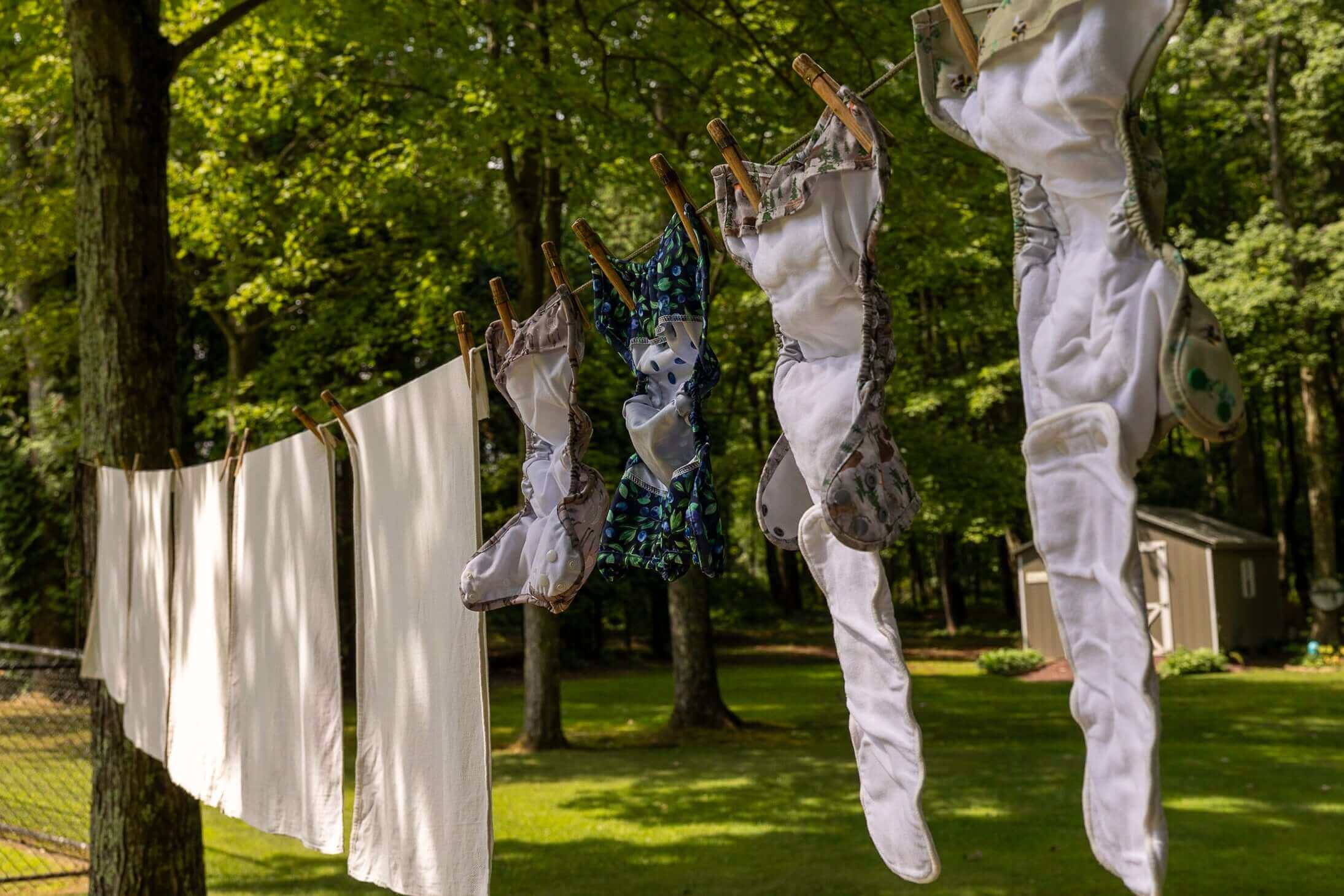
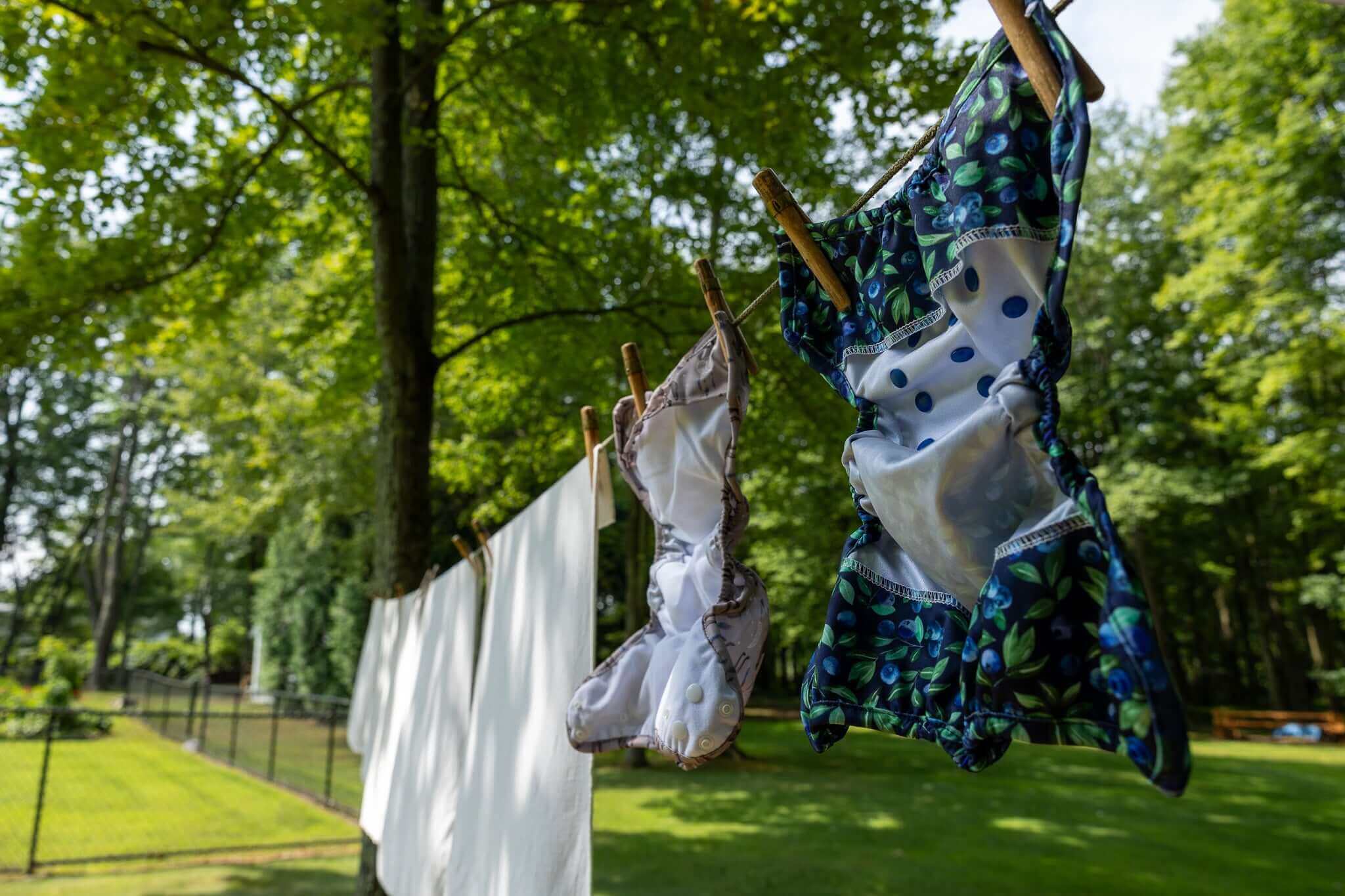
Line drying in sunlight is the most economical option and has the added benefit of naturally bleaching stains. If you are in a climate where outdoor drying is not always practical (and if you are in Ireland, we are well aware of the reality), an indoor drying rack near a window works well too.
Tumble drying is safe for absorbency components such as inserts, prefolds, and terry cloth diapers. Use a low or medium heat setting. However, do not tumble dry any component with a TPU or PUL waterproof layer, as sustained heat will degrade the waterproofing over time. For Bayrli products, this means your Everyday Diaper shells, Outer covers, and Deluxe Diapers should be line dried or dried on a rack. The inserts and absorbency that go inside them can be tumble dried.
Common Mistakes to Avoid
Using too little detergent. This is the most frequent error we see. Cloth diapers are heavily soiled laundry. They need a full measure of detergent to get clean. If your diapers smell fine coming out of the wash but develop an ammonia smell once your baby wears them, insufficient detergent is almost certainly the cause.
Washing at too low a temperature. A 40°C main wash will not sanitise effectively. Your main wash should be 60°C. The pre-wash can be 40°C, but the main wash needs the higher temperature to break down urine crystals and kill bacteria.
Using fabric softener. Fabric softener coats fibres with a waxy layer that repels moisture. This is the opposite of what you want in a diaper. If you have accidentally used fabric softener, run a few hot washes with detergent and no softener to strip the coating.
Soaking diapers for extended periods. Prolonged soaking damages elastic and can degrade the waterproof layer. A dry pail is the standard recommendation for between-wash storage.
Overloading the machine. If your machine is packed tight, water cannot circulate and diapers will not get clean. Two-thirds full is the target.
How Often Should You Wash?
Every two to three days. Leaving soiled diapers longer than three days increases the risk of ammonia build-up, staining, and odour that becomes harder to remove. If you have a sufficient stash of diapers, typically 20 to 30 for full-time use, a wash every other day or every third day will keep you in a comfortable rotation.
A Note on Hard Water
If you live in an area with hard water, minerals can build up in your diapers over time and reduce absorbency. Signs of mineral build-up include diapers that feel stiff after washing, reduced absorbency, and a barnyard-like smell. If you suspect hard water is causing issues, read our dedicated guide on cloth diapers and hard water for specific advice on water softeners and adjusted detergent doses.
When Simple Washing Is Not Enough
If you have followed this routine and your diapers still smell, repel moisture, or seem less absorbent than they once were, you may need to strip your diapers. Stripping is a deep-clean process that removes stubborn build-up of detergent residue, mineral deposits, and oils. It is not something you should need to do regularly; think of it as a reset. We have a full guide on how to strip cloth diapers that walks you through the process.
The Bottom Line
A good wash routine is the foundation of successful cloth diapering. Pre-wash short at 40°C, main wash long at 60°C, use enough detergent, dry appropriately, and wash every two to three days. That is genuinely all there is to it. The anxiety around washing cloth diapers is disproportionate to the actual complexity of the task. Once you have your routine established, it takes no more thought than any other load of laundry.
If you are just getting started and want to understand how to prepare your diapers before first use, our prep guide covers every Bayrli product. And if you would like personalised advice on any aspect of your cloth diaper routine, do not hesitate to contact us. We answer every message, and we have been doing this long enough to have encountered most problems at least twice.
Frequently Asked Questions
How do you wash cloth diapers? Wash cloth diapers using a two-cycle routine: a short pre-wash at 40°C with half a dose of powder detergent, followed by a long main wash at 60°C with a full dose. Wash every two to three days. Use a mainstream powder detergent such as Tide Free & Gentle (US) or Persil Non-Bio (Ireland/UK) at the recommended dose for a heavily soiled load.
What temperature should I wash cloth diapers at? Pre-wash at 40°C to flush out the bulk of soiling. Main wash at 60°C to sanitise and fully clean. Do not wash the main cycle below 60°C; lower temperatures will not break down urine crystals or kill bacteria effectively.
How often should I wash cloth diapers? Every two to three days. Leaving soiled diapers longer than three days increases the risk of ammonia buildup, persistent odour, and staining that becomes difficult to remove.
Can I tumble dry cloth diapers? Tumble dry absorbent inserts and prefolds on low or medium heat. Do not tumble dry waterproof shells, covers, or any component with a TPU or PUL layer, as sustained heat degrades the waterproofing. Line dry or rack dry all waterproof components.
How much detergent should I use for cloth diapers? Use the full dose recommended on the packaging for a heavily soiled load. Do not reduce the dose. Under-dosing detergent is the most common cause of persistent odour and ammonia smell in cloth diapers. If you have hard water, increase to the hard water dose and add a water softener.
Why do my cloth diapers smell after washing? If diapers smell of ammonia when your baby wears them, you are likely using too little detergent or washing at too low a temperature. Increase your detergent dose to the full recommendation for a heavily soiled load and ensure your main wash is at 60°C. If the problem persists, your diapers may need stripping to remove buildup.